
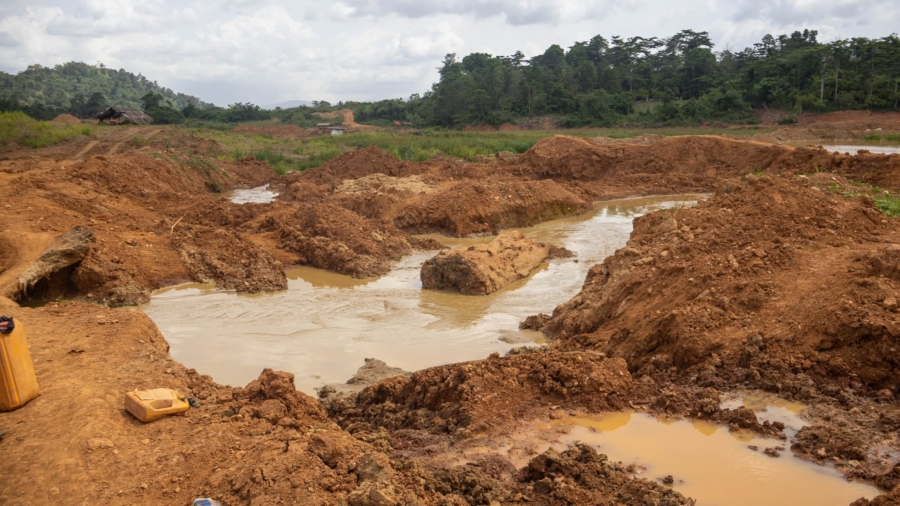
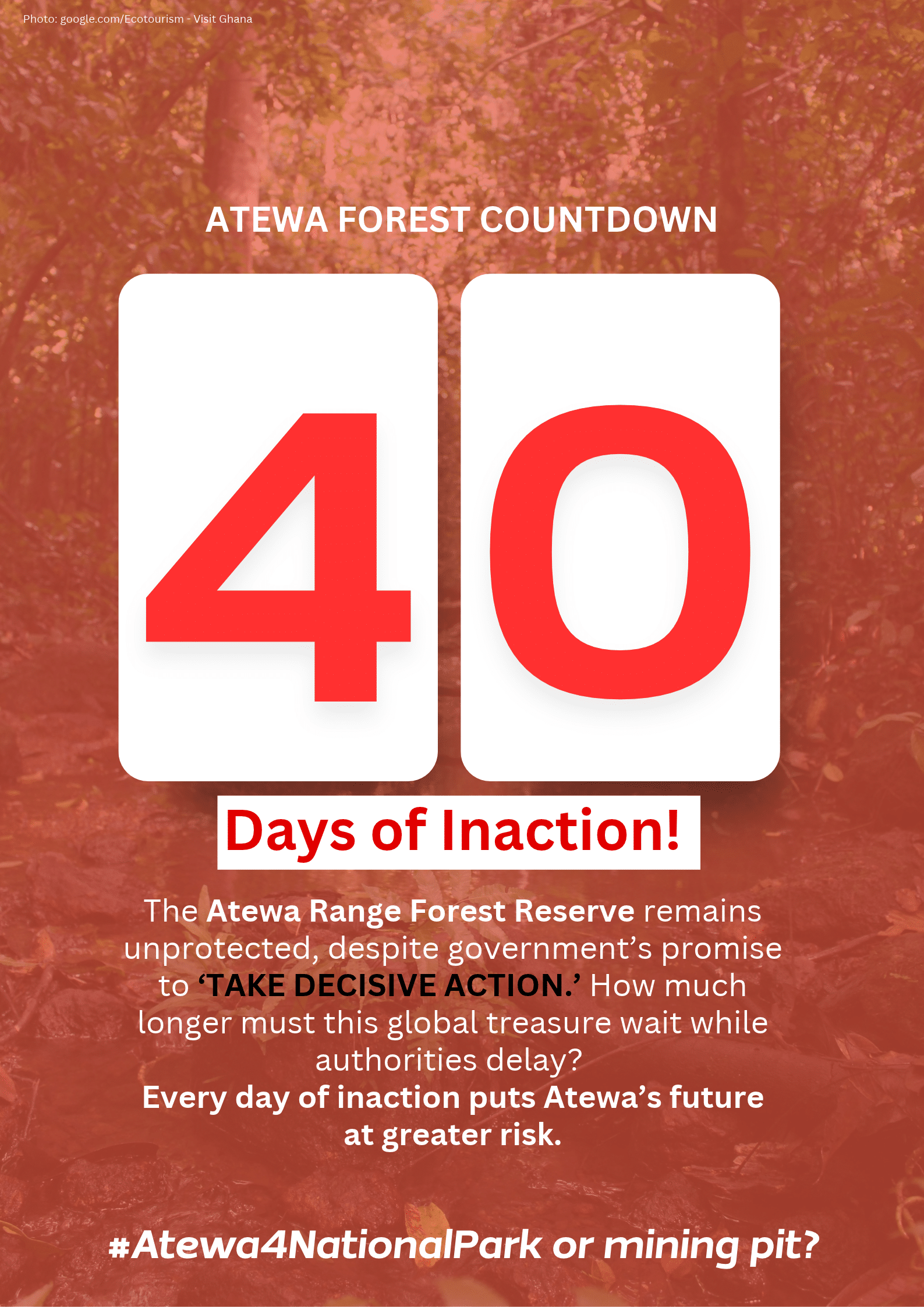
For more than a month, we counted. Day after day, we counted down to the moment when meaningful action would be taken to protect and secure the Atewa Forest Reserve from the growing threat of illegal mining.
On September 15, 2026, the National Anti-Illegal Mining Operations Secretariat (NAIMOS) promised ‘decisive action’ to address concerns about degradation in Atewa Forest that environmental watchers had raised. The countdown reached Day 40, and then, on 27 October, Operation Green Shield began in Atewa.
The Ministry of Lands and Natural Resources, in collaboration with the Ghana Armed Forces and other relevant agencies, launched the intervention as a planned forest protection operation aimed at disrupting illegal mining in priority areas, denying renewed access, and creating the conditions for sustained protection of the affected forest.
For us at A Rocha Ghana, the launch marked an important moment. We have now brought our countdown to a halt. Not because the threat to Atewa has disappeared. Not because the work is over. But because, after 40 days of counting, something has finally begun.
According to the Minister for Lands and Natural Resources, Hon. Emmanuel Armah-Kofi Buah, Operation Green Shield is structured around three stages: clear and disrupt; hold and stabilise; and transition and handover. The intention is not only to clear illegal mining activity from priority areas, but also to hold those gains through sustained patrols and surveillance, and eventually transition routine protection to the Forestry Commission.
Why this is critical
Atewa, like other affected forest reserves, cannot afford a cycle where illegal mining is pushed out today only to return tomorrow. The real measure of this intervention will be whether the forest remains protected after the initial operation, whether illegal miners are prevented from returning, and whether damaged areas are allowed to recover.
Atewa is more than a forest reserve. It is a Globally Significant Biodiversity Area (GSBA) with a critical watershed, protecting the headwaters of the Birim, Ayensu and Densu rivers and supporting an extraordinary diversity of life. What happens in Atewa does not remain in Atewa. Its forests and rivers matter to communities, ecosystems and livelihoods far beyond its boundaries.
So, after 40 days, we have stopped counting.
But we have expectations
We have expectations that what has started in Atewa will begin to translate into the change we have been desperately calling for;
Expectations that the clearing of illegal mining sites will be followed by sustained protection;
Expectations that the forest will be given room to breathe, recover and continue performing the ecological functions on which so many depend;
And expectations that this is the beginning of a sustained commitment to securing Atewa as a National Park.
The countdown has stopped. The work continues.
Atewa must remain protected